The Issue of Islamic Schools for Afghan Families in Philadelphia – Challenges and Hopes
After the fall of Afghanistan in 2021 and the resettlement of hundreds of families across the United States, Philadelphia became one of the cities that welcomed a large number of Afghans. Now, alongside economic and language challenges, many families face another major concern: providing Islamic education for their children.
Some of these families send their children to Islamic schools to help them maintain their religious identity alongside general education. However, high tuition costs, the long distance between schools and their homes, and the limited number of Islamic schools pose significant challenges. At the same time, some families try to pass on Islamic teachings to their children through mosques, by enrolling them in Quran memorization and religious studies classes offered there, but these programs also comes with challenges such as a shortage of teachers and limited capacity. Despite all these challenges, Afghan families remain hopeful that conditions will improve so their children can continue public education while staying connected to their faith and Islamic vaalues, an effort that reflects the resilience of the Afghan community in their new homeland.
Salma Emadi, an Afghan woman who arrived in Philadelphia sixteen years ago, says the mosque quickly became a second home for her. “I have been going to the mosque for years,” she said. “Not only for Friday and Eid prayers but also for the many programs that take place there.”
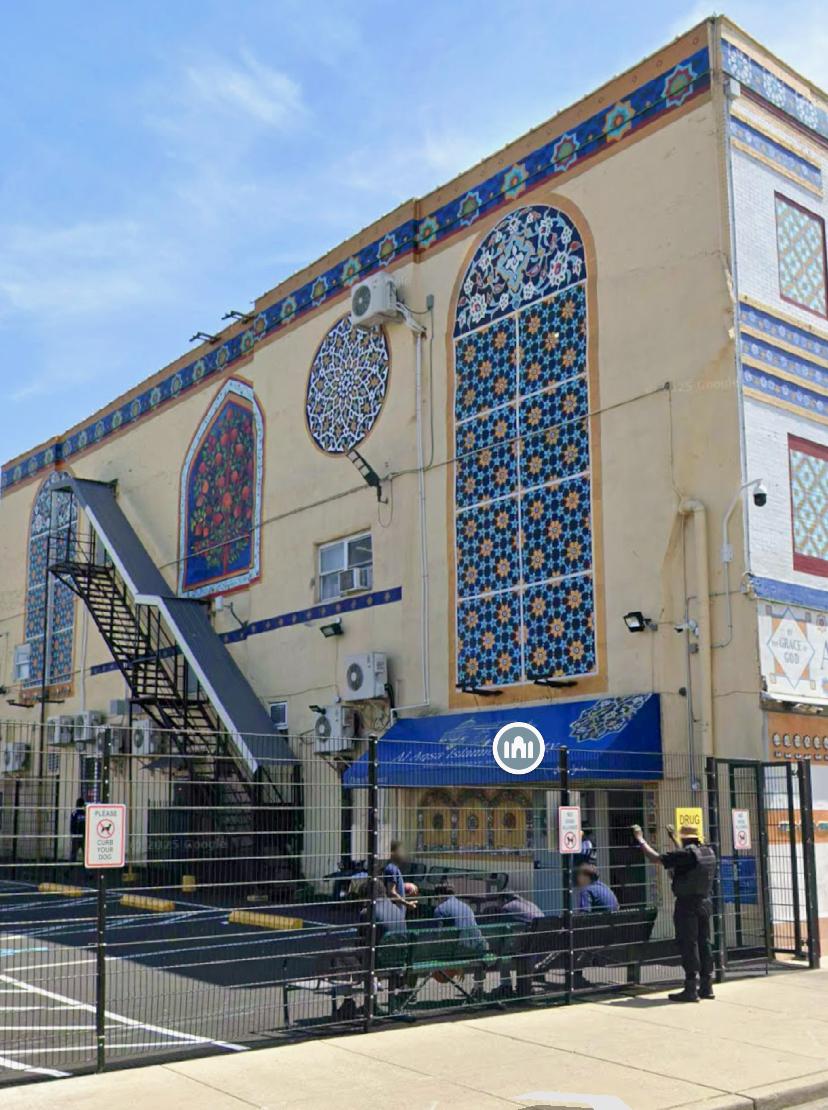
Her children attend Al-Aqsa Islamic Academy, which she says is very different from public schools. “In Islamic schools, more religious subjects are taught. This helps children gain a deeper understanding of their faith alongside public education,” she explained.
Salma believes it is very important for Afghan families to send their children to such schools. “Here, children not only study but also become more familiar with their religion and increase their Islamic awareness,” she said.
Still, challenges remain. “The schools are far from where we live, and the costs are high,” she added. “If there were more Islamic schools or financial support for families, it would really lift a big burden off our shoulders.”
Nilofar Qayoumi, another Afghan mother who arrived in Philadelphia with her family only few years ago, says that soon after moving to the city, she learned about the mosque through friends, and it quickly became one of the most important parts of her and her child’s daily life.
Her daughter attends Quran memorization classes at the mosque. Nilofar explains that the mosque is not only a place of worship but also a community hub for Afghans. “Friday and Eid prayers are always held, and there are Islamic classes for children,” she said. However, she added that one of the greatest needs in the Afghan community is “qualified teachers to provide Islamic education to children.”
She knows several Islamic schools in the city — Al-Aqsa, the Turkish Islamic School, and Al-Hidaya — and believes sending children to these schools is essential. “In these schools, children learn about religious topics, memorization of the Quran, and learn about Islamic practices such as wearing the hijab,” she said. Even the homework and assignments, she noted, focuses more on religious education.
However, challenges persist. “The schools are far from us, and tuition fees are very high. Transportation costs add to these problems,” Nilofar said.
She is not the only mother facing these challenges. Sadaf Sadat, another Afghan mother in Philadelphia, shares similar concerns. Having moved to the city only a few years ago, she said, “Although my children are not yet enrolled in Islamic schools, I really hope to enroll them in Quran lessons at the mosque.” According to her, in addition to Friday and Eid prayers, the mosque also offers short-term Islamic programs for Afghan children.
Still, like many others, Sadaf points out the unmet needs of the community: “Right now, one of the biggest needs of Afghan families is having enough teachers who can teach Islamic subjects to children.”
She is personally familiar only with Al-Aqsa Islamic Academy but believes such schools are very important for Afghan families. Even so, financial and transportation issues remain major barriers. She believes that although Philadelphia has some Islamic schools, the costs and distances prevent many Afghan families from sending their children there.
Despite all this, Sadaf remains hopeful that one day conditions will improve, allowing her children to receive both general and Islamic education in a more regular and accessible way.
Note: In a conversation between the Philly-Afghan InfoHub in Philadelphia and Al-Aqsa Islamic Academy, the school mentioned only scholarships offered by the city or government for families, not any internal scholarships provided by the school itself. Information and application details for these city scholarships can be found at the following link: