
Public Benefit Use May Affect Green Card Decisions
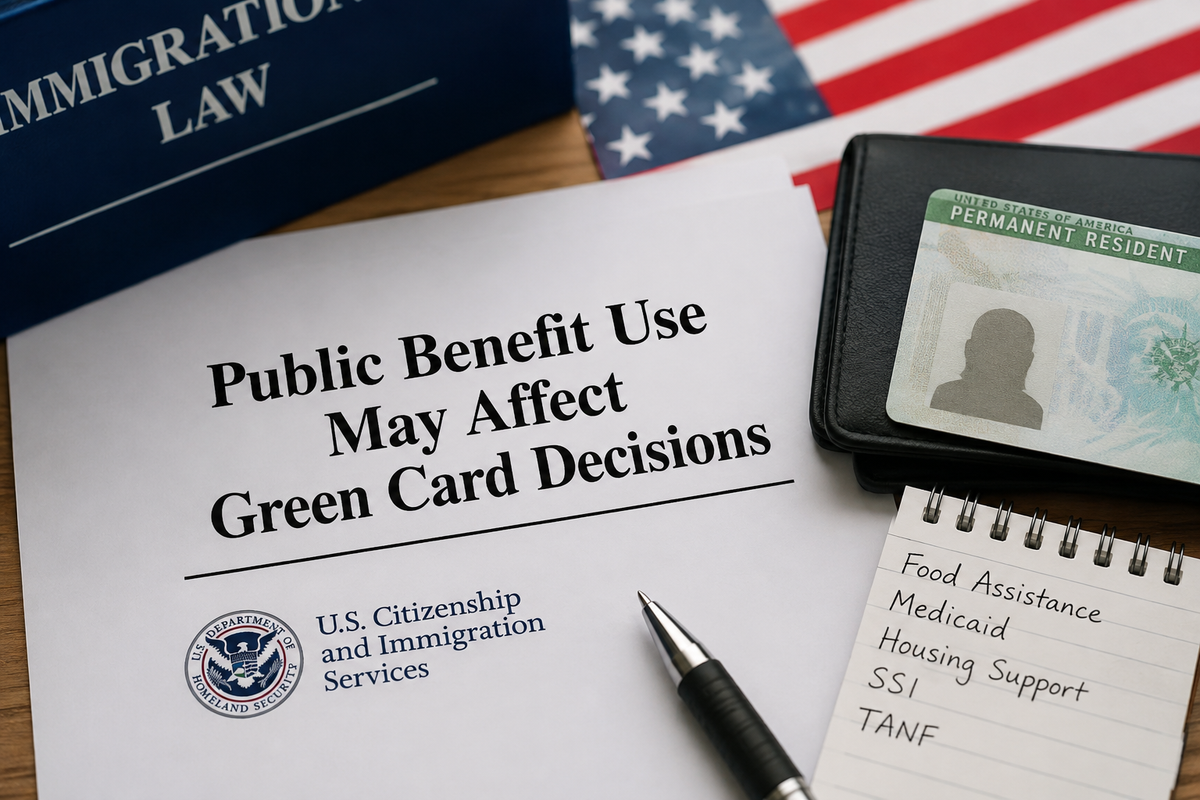
In a setback for noncitizens applying for green cards, an upcoming change may affect applicants using public benefits.
On July 20, the Department of Homeland Security (DHS) finalized a ruling on how immigration officials weigh the “public charge” test. Under the Immigration and Nationality Act (INA), noncitizens applying for visas, admission or an adjustment of status are considered inadmissible if they are likely to be a public charge. This term is when a noncitizen is evaluated as likely to rely on government support in the future.
Initially, only public cash assistance and long-term care Medicaid care were factored in determining public charges. However, in 2018 President Donald Trump made changes expanding the policy. The changes allowed United States Citizenship and Immigration Services (USCIS) officers to also factor a wide range of benefits such as Medicaid, CHIP, SNAP and housing assistance. This meant that noncitizens who are using or have used these benefits could be denied their green cards in the future. During former President Joe Biden’s administration, he reverted these changes, but they have now been undone under the second Trump Administration.
The DHS stated that the new policy “restores broader discretion for DHS officers to evaluate all pertinent facts and aligns with long-standing policy that aliens in the United States should be self-reliant and government benefits should not incentivize immigration.”
This change can also affect noncitizens outside the country applying for admission. However, it will not affect noncitizens who are refugees and asylum seekers because they are exempt from the “public charge” test. Also exempt are noncitizens on temporary protected status, DACA, U or T visas, Special Immigrant Juvenile Status (SIJS), Iraqi/Afghan Special Immigrant Visas (SIV) and many others.
The removal might push away noncitizen families from using public benefits out of fear of their applications being denied. According to Urban Institute, 13 percent of adult immigrant families reported they or a family member did not participate in public benefit programs such as Medicaid, SNAP, or housing assistance because of green card concerns in 2022.
The new rule will take effect on Sept. 18 2026. Any application that is postmarked or electronically submitted prior to this date will not be subject to the new ruling, even if their case is examined after the new rule takes effect. Additionally, those applying on or after Sept. 18, must fill out a revised I-485, Application to Register Permanent Residence or Adjust Status otherwise their form will not be accepted.
It is best to consult an immigration lawyer to get a better understanding of any individual cases.
Sign up for Philly-Afghan Info Hub
A community project supporting Afghan residents of Philadelphia
No spam. Unsubscribe anytime.