
Important Changes to SNAP and Medicaid for Afghan Families in Philadelphia
This recap highlights key changes to SNAP and Medicaid eligibility affecting Afghan families, explains available food and healthcare resources, and outlines how community members can challenge benefit denials with guidance from Community Legal Services (CLS).
Community Information Guide | Philly-Afghan Info Hub (PAIH)
Prepared following a community information session with Community Legal Services (CLS)
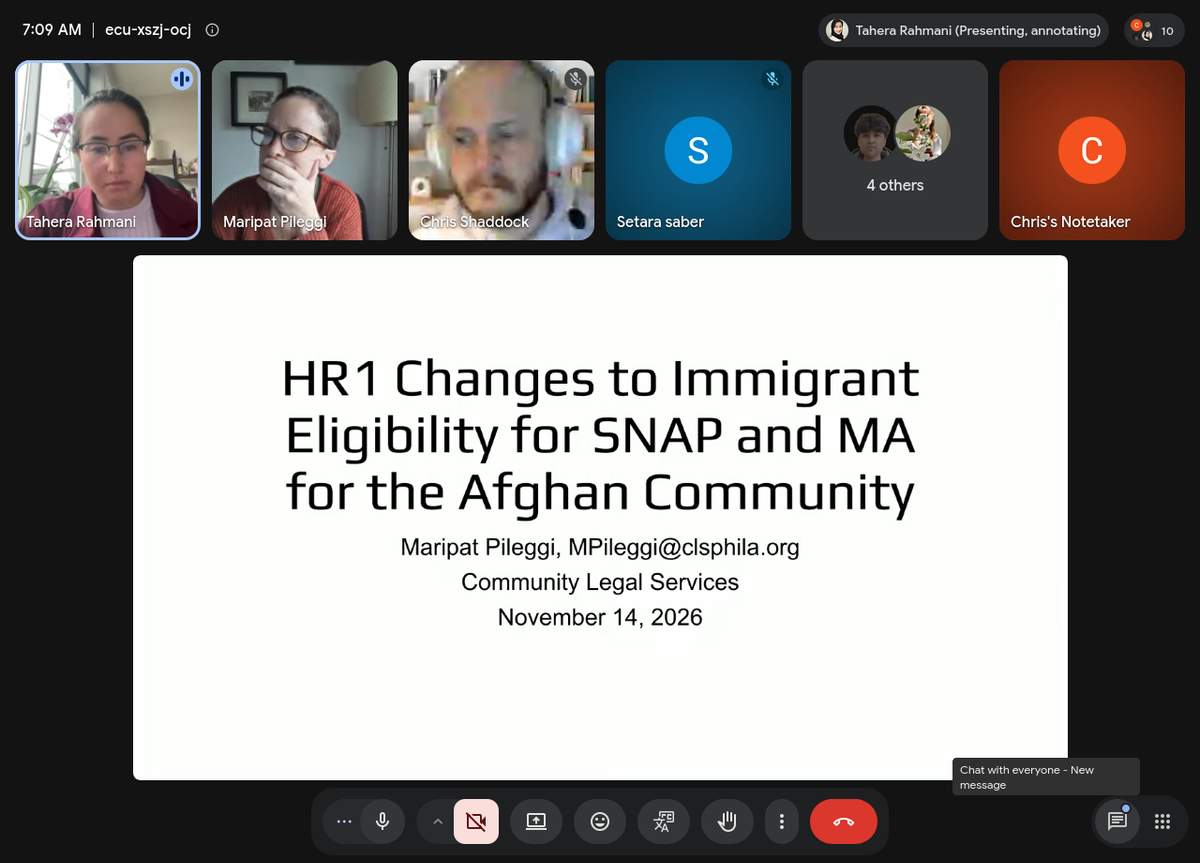
Philly-Afghan Info Hub recently hosted an information session in collaboration with Community Legal Services (CLS) to help Afghan community members understand recent changes to SNAP (food assistance) and Medicaid (health coverage).
During the session, CLS attorney Maripat Pillegi explained how recent federal legislation affects immigrants' eligibility for these programs, which immigration categories may still qualify, what alternative resources are available, and how individuals can appeal decisions about their benefits.
This guide summarizes the information shared during the presentation. It is intended to help community members better understand their options and know where to seek assistance.
1. Understanding the changes
Recent federal legislation known as HR 1 introduced changes to eligibility for SNAP and Medical Assistance (Medicaid) for certain immigrants.
These changes took effect at different times:
- November 1, 2025: Changes to SNAP eligibility.
- October 1, 2026: Changes to Medical Assistance eligibility.
The changes particularly affect some immigrants who do not have a green card.
The presentation focused on five immigration categories:
- Lawful Permanent Residents (LPRs), also known as green card holders.
- Refugees.
- Asylees (people granted asylum in the United States).
- Special Immigrant Visa (SIV) holders from Afghanistan.
- Afghan parolees who entered the United States following the U.S. military withdrawal in 2021.
Important: Refugees, asylees, and many SIV holders may already have green cards. Their eligibility can be different from people who have not yet received their green cards.
2. SNAP (Food Assistance)
SNAP, commonly called food stamps, is a federal program that helps low-income households purchase food.
You can apply through your County Assistance Office or online through Pennsylvania's COMPASS system.
According to the presentation:
- SNAP is available to eligible households with incomes up to 200% of the federal poverty level.
- There is no asset limit, meaning savings in a bank account do not automatically disqualify someone.
- Benefit amounts depend on household size, income, and certain household expenses.
Who can receive SNAP?
If you have a green card:
Refugees, asylees, and SIV holders who have received their green cards remain eligible for SNAP under the rules discussed in the presentation.
There is no five-year waiting period for these groups. HR 1 did not change this rule.
If a County Assistance Office tells you that you must wait five years because of your refugee, asylee, or SIV status, CLS advises that this is incorrect.
If you do not have a green card:
Under the new rules discussed during the session, refugees and asylees who have not yet received their green cards, as well as Afghan parolees, are no longer eligible for SNAP based on those immigration categories alone.
This is an important change from the previous rules.
Can other members of your family still receive SNAP?
Yes.
If you are not eligible for SNAP because of your immigration status, other eligible members of your household may still qualify.
For example, if a parent does not have a green card but has a U.S. citizen child, the household may apply for SNAP for the eligible child.
Other food assistance options
Even if your immigration status makes you ineligible for SNAP, other food resources are available.
- School meals: Children can receive school meals regardless of their immigration status.
- WIC: Provides food and nutrition assistance to eligible children under five and pregnant or breastfeeding mothers, regardless of immigration status.
- Food cupboards: Food cupboards across Philadelphia provide food assistance regardless of immigration status. Check these resources to find out if help is available:
These resources remain important options for families experiencing food insecurity.
3. Medicaid (Medical Assistance)
Medical Assistance, commonly called Medicaid or MA, is a health insurance program for eligible low-income individuals and families.
Applications are available through the County Assistance Office or Pennsylvania's COMPASS website.
Who remains eligible?
Children under 21 and pregnant individuals
Children under 21 and pregnant individuals who are lawfully present remain eligible under the rules discussed in the presentation.
This includes people with green cards, refugee status, asylum status, SIV status, and Afghan parole status.
There is no five-year waiting period for these groups.
The pregnancy coverage period also includes 12 months after childbirth.
Adults with green cards
Adults who have green cards remain eligible for Medical Assistance under the same immigration eligibility rules as U.S. citizens, provided they meet the other program requirements.
This includes refugees, asylees, and SIV holders who have received their green cards.
There is no five-year waiting period for these groups.
What if you are an adult without a green card?
Starting October 1, 2026, the options for some adults without green cards became more limited.
The presentation explained two possible pathways:
1. State-funded Medical Assistance
Some individuals without green cards may qualify for Pennsylvania's state-funded Medical Assistance program.
The presentation identified the following groups as potentially eligible:
- People receiving Supplemental Security Income (SSI).
- Older adults who meet the program's age requirements.
- Parents of children under 21.
- Non-parent caregivers of children under 18.
- People with disabilities.
- People caring for a household member with a disability.
- Domestic violence survivors.
- People participating in drug or alcohol rehabilitation.
Eligibility depends on individual circumstances and program requirements.
2. Emergency Medical Assistance
People who do not qualify for regular or state-funded Medical Assistance may still qualify for Emergency Medical Assistance if they have an emergency medical condition.
These are conditions that require prompt treatment to prevent serious health consequences.
Examples discussed during the presentation included:
- Cancer.
- Kidney disease requiring dialysis.
- High-risk pregnancy.
- Post-organ transplant care.
- Certain seizure disorders.
- Surgeries.
- Broken bones.
Eligibility and coverage depend on the medical condition and individual circumstances.
Home and Community-Based Services (HCBS)
Home and Community-Based Services provide care and support to people with disabilities who need assistance with daily living but wish to receive care at home rather than in a nursing home.
The presentation highlighted that:
- People with green cards may qualify for these services through Medical Assistance under the same rules as U.S. citizens.
- People without green cards may potentially qualify through state-funded Medical Assistance, but accessing these services can be difficult.
Important: If you need home care or disability-related services and the County Assistance Office tells you that you are ineligible, CLS may be able to help you understand your options and challenge the decision.
Can my children receive Medicaid if I cannot?
Yes.
Even if a parent is not eligible for Medical Assistance, other eligible family members may still qualify.
For example, if a parent and child are both refugees without green cards, the parent may not qualify for certain Medical Assistance programs, but the child may still be eligible.
4. Other healthcare options
If you cannot receive Medical Assistance, there are still ways to access healthcare in Philadelphia.
The presentation identified several options:
- Hospital emergency rooms: Hospitals must provide emergency screening and stabilizing treatment regardless of a patient's insurance or immigration status.
- Hospital charity care: Hospitals have financial assistance programs that may help uninsured or underinsured patients pay their medical bills.
- Prescription assistance programs: Some programs provide discounted prescription medications.
- Philadelphia City Health Centers: The city operates health centers that provide services regardless of insurance or immigration status.
- Federally Qualified Health Centers (FQHCs) and community health clinics: These facilities provide primary healthcare regardless of insurance or immigration status. Check out more information through the following link:
https://www.phila.gov/documents/list-of-federally-qualified-health-centers/
Do not assume that you have no healthcare options simply because you cannot receive Medical Assistance.
5. What to do if your benefits are denied or terminated
If the County Assistance Office denies your SNAP or Medical Assistance application, reduces your benefits, or sends you a notice that your benefits will be terminated, you may have the right to appeal.
An appeal allows you to challenge a decision that you believe is incorrect.
How to file an appeal
- Read the notice you received from the County Assistance Office.
- Look for the appeal form included with the notice.
- Complete the form and identify the program you are appealing.
- If you need an interpreter, indicate that on the form.
- Sign and date the appeal.
- Submit it to the County Assistance Office.
- Keep a copy of everything you submit and request a receipt confirming that your appeal was received.
If you cannot find the appeal form, CLS explained that you can also submit a written statement requesting an appeal, as long as it is signed.
Do not miss the appeal deadline
Appeal deadlines can be short.
The presentation highlighted the following timelines:
- For certain Medical Assistance termination notices, the appeal deadline is 30 days.
- If you appeal a termination within 15 days, you may be able to keep receiving your benefits while the appeal is pending.
The applicable deadline depends on the type of notice and benefit involved.
Do not wait until you speak with a lawyer to file an appeal. CLS recommends submitting your appeal as soon as possible so that you do not miss the deadline while seeking legal assistance.
What if your notice is in the wrong language?
If you previously informed the County Assistance Office that you need notices in another language but receive a notice in English, you may have additional grounds for challenging the deadline.
However, you should still submit your appeal as soon as possible.
Can CLS help with an appeal?
Yes. Community Legal Services may be able to provide free legal assistance to eligible Philadelphia residents dealing with SNAP or Medical Assistance problems.
6. Where to get help
Community Legal Services (CLS)
CLS provides free legal representation to eligible low-income residents of Philadelphia, including people experiencing problems with SNAP and Medical Assistance.
CLS also provides free professional interpretation for people who need language assistance.
If you have been denied benefits, received a termination notice, or are having difficulty accessing services, you can contact CLS to ask whether they can assist with your case.
For contact information and intake instructions, visit the CLS website:
You can also consult Pennsylvania's COMPASS website for applications and information about public benefits:
https://www.compass.dhs.pa.gov/
A note from Philly-Afghan Info Hub
Access to food assistance and healthcare is important for the well-being of Afghan families and our wider community.
Changes in eligibility rules can be confusing, particularly when they involve different immigration categories and individual family circumstances.
We encourage community members to seek reliable information, read notices from the County Assistance Office carefully, and ask for legal assistance when they have questions or believe a benefits decision is incorrect.
This guide summarizes information shared during the PAIH community information session with Community Legal Services. It is for general educational purposes and is not a substitute for individual legal advice.