
Getting a green card: how one family is navigating hurdles in the process
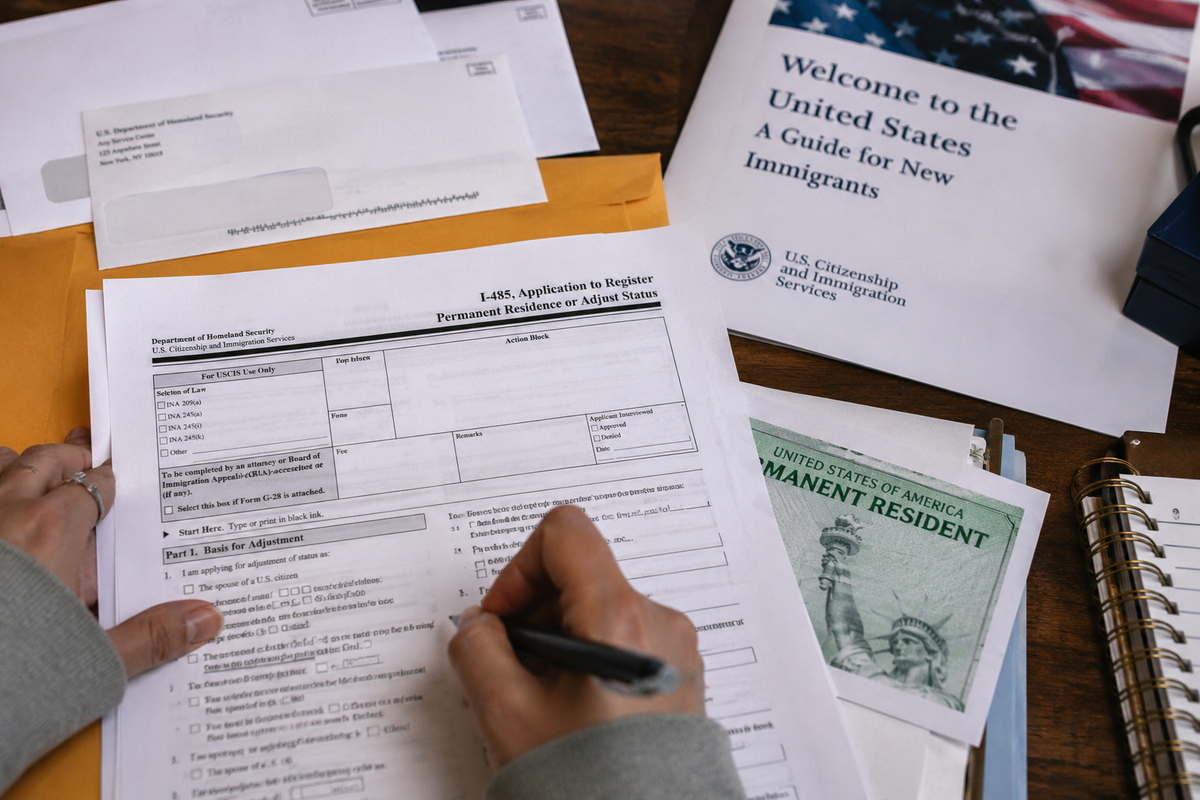
An Afghan family in the Philadelphia area has spent three years navigating an uncertain path toward permanent residency in the United States. As immigration policies shift and processing delays continue, the family faces mounting fears about deportation, employment, and their future.
Walking home from the local grocery store, the mother of a local Afghan family stopped in her tracks, bags still in hand, and rushed to conceal herself behind a bush. She caught sight of a police car and immediately feared they were there to deport her. For this woman and many Afghans in Philadelphia, law enforcement no longer signifies safety, but a potential threat.
Deportation is just one of many concerns Afghan immigrants face on a daily basis.
According to the International Refugee Assistance Program, the United States government announced in November 2025 that it would indefinitely halt issuing visas and processing immigration requests for Afghan nationals.
Additionally, according to #AfghanEvac, a May 21 policy memorandum from U.S. Citizenship and Immigration Services aims to prevent immigrants from obtaining lawful permanent residence in the United States. The memo directs immigration officers to treat an adjustment of status as an “extraordinary act of discretion,” rather than a standard legal procedure.
A simultaneous press release from USCIS states that those temporarily in the U.S. must return to their home country in order to apply for a green card. Of course, there are no U.S. consular services available in Afghanistan.
While Afghans who entered the country through Enduring Welcome or CARE relocation after 2022 should not be impacted, others will face uncertainty.
“We had been told in the first place that we would receive our green cards in one year, but now it has been three years,” said Mohammad, an Afghan refugee living in a Philadelphia suburb with his wife, the woman in the aforementioned grocery store anecdote, and his two daughters.
Mohammad has been navigating the United States documentation process for three years. He and his family have faced the same challenges and difficulties many immigrants, especially those in Afghan communities, have been dealing with while awaiting confirmation of their green card status.
“Right now, I'm thinking, ‘If they decide to stop my green card application, what should I do next?’ If we get deported then what should I do? I don't have anywhere to go,” said Mohammad. “I used to live in Indonesia for over six years, and before that I was in Afghanistan. Right now, I don't have any place, either in Indonesia or in Afghanistan, to live.”
Beyond the ongoing stress of the process, increased immigration control and anti-immigrant rhetoric in the United States have affected the family both mentally and physically.
According to KabulNow, at least 104 Afghan nationals have been deported from the United States directly to Afghanistan between October 2022 and March 2026. Approximately 1,156 Afghan nationals were removed and sent to a third country, often Canada, within the same time frame. Many of these deportations were classified as “immigration violations,” with no criminal convictions otherwise cited.
After a November 2025 shooting involving Afghan national and former soldier Rahmanullah Lakanwal in Washington D.C., many members of Afghan communities feared that these numbers would increase at an even greater rate.
Additionally, the potential for physical backlash has since remained at the forefront of many Afghans’ minds, especially Mohammad’s wife. She was recently diagnosed with diabetes as a result of heightened nerves.
“[My wife] was too worried to be recognized as an Afghan lady on the street, so [she] decided to change the way she dressed to blend in more when she was outside,” said Mohammad. “She was thinking if anybody saw her on the street and recognized that she was Afghan, she might be attacked or maybe get arrested by a police officer.”
As a result of these fears, choosing between safety and cultural connection has become a defining challenge for Afghan communities.
“It was very hard for her because she loves her Afghan way of clothing,” said Mohammad.
Mohammad also worries that his daughters, both of whom are attending school while working to support themselves and their family, will be similarly impacted by the uncertainty of their situation.
“Whenever it is time that [my daughters] have to apply for an Employment Authorization Document (EAD) card extension, it is very stressful and tough for them because they are worried their application will be rejected.”
Besides managing his wife’s and daughters’ health and safety, Mohammad must also prioritize his own work.
“I'm continuing to extend my EAD card, which is fine for now, but it might stop and then I will lose my job,” said Mohammad. “If I lose my job, then how can I take care of my family?”
During these difficult times, Mohammad pointed out that he and his family have received some assistance from the Afghan community in and around Philadelphia. The community’s shared experience is its own form of support.
Sign up for Philly-Afghan Info Hub
A community project supporting Afghan residents of Philadelphia
No spam. Unsubscribe anytime.
“[The Afghan community] is mostly helping us for more social support because they cannot do much on the legal part,” said Mohammad. “Sometimes we get good information about how we can start the submission of an application, for example, extending an EAD card or applying for government benefits like SNAP or Medicare.”
Mohammad also mentioned that non-Afghans have extended support, especially when it comes to offering services and resources the family otherwise might not have known about.
“There is a very nice group called WISH. They're all volunteers from the Church of the Saviour that are helping immigrants,” said Mohammad. “We got so much help from them.”
Above all, Mohammad hopes that his family’s story can provide some insight for others dealing with a similar situation.
“This procedure is kind of very slow, especially right now, so [others] should be patient and also try to make sure that all the documents [for the application] are submitted,” said Mohammad. “Also, if they could meet with an attorney and get advice during the application submission, that would be a great help for them to just relax while waiting for the application confirmation and receiving the document.”
Despite the challenges they have faced over the last three years, Mohammad is hopeful that his family’s documentation process will reach a conclusive, successful end soon.
“The best news for my family would be receiving our green card very soon, maybe in a couple of weeks or the coming month,” said Mohammad. “That is our wish for now, and we are just praying for that.”